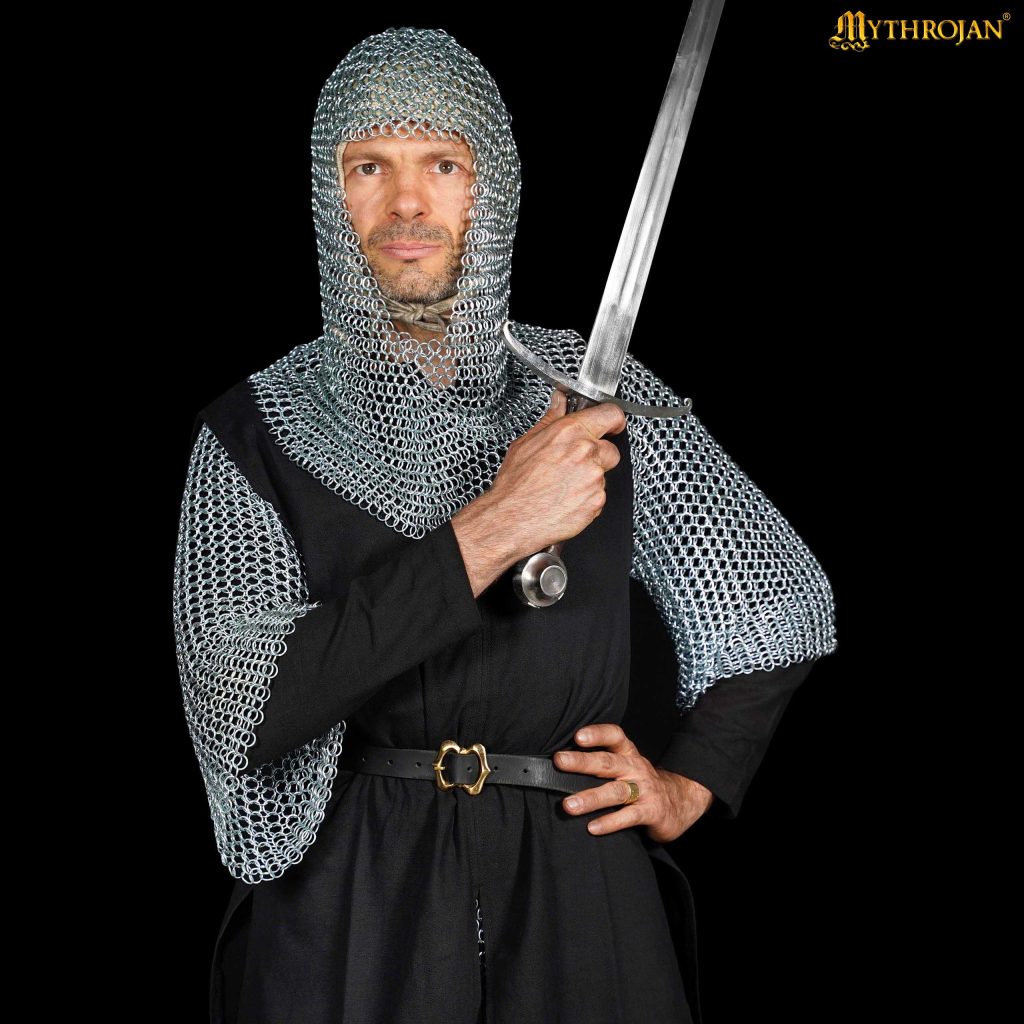
Department · 7 products
Chainmail Armor
Wearable chainmail: coifs, shirts, and armor-grade pieces.
Every piece of chainmail for sale on this shelf is wearable: shirts (hauberks and haubergeons), coifs, and shirt-and-coif sets. Compare construction, ring size, wire gauge, weight and fit before choosing a piece.
Below the shelf: what chainmail actually costs, butted versus riveted, steel versus aluminum versus brass, how to size a shirt, and how many rings it takes to make your own.
Showing all 3 results
-
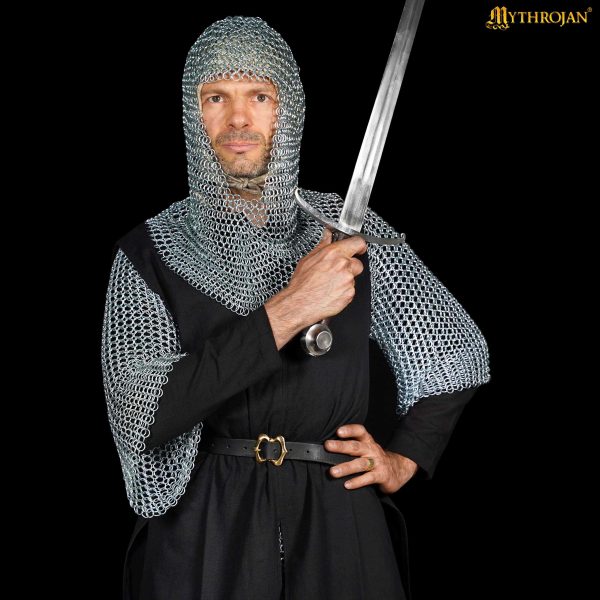
Chainmail Coif — 16 Gauge Butted Mild Steel
$69.99 Add to cart -
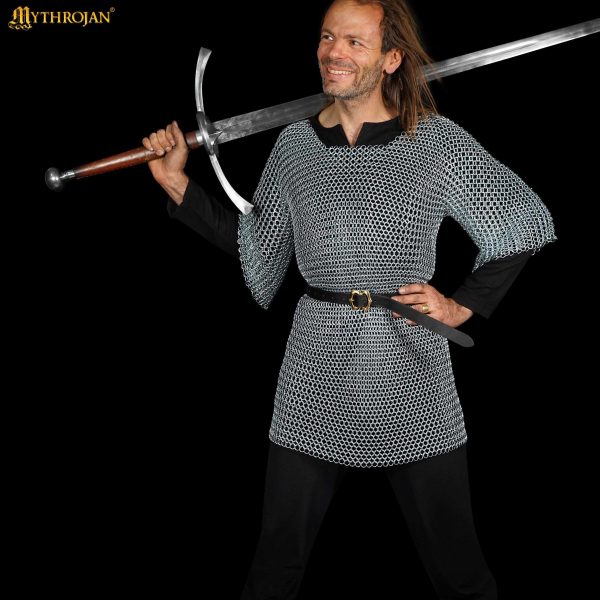
Chainmail Half-Sleeve Shirt — Zinc Polish
$149.99 Add to cart -
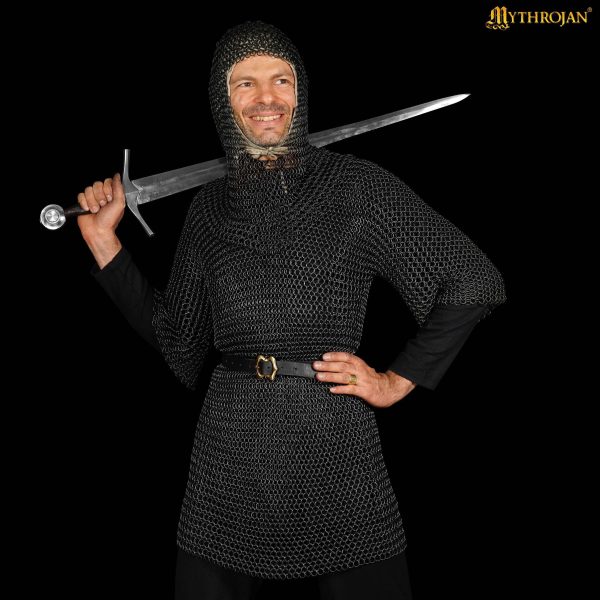
Chainmail Shirt & Coif Set — Black Finish
$189.99 Add to cart
Before you buy
What chainmail costs
Typical asking prices across Amazon, eBay, Etsy and the armor houses, checked 2026-09-01. Under $40 for a “shirt” is a costume weave: thin aluminum or plastic rings with loose butts. Above $300 you are paying for riveted rings, tailoring, or both.
| Piece | Butted, mild steel | Butted, aluminum | Riveted, mild steel |
|---|---|---|---|
| Coif (hood) | $40–80 | $35–70 | $90–180 |
| Short-sleeve shirt (haubergeon) | $70–150 | $75–130 | $180–350 |
| Long-sleeve shirt (hauberk) | $120–220 | $110–180 | $250–600+ |
| Shirt + coif set | $130–200 | $120–190 | $300+ |
Butted or riveted?
Butted rings are closed by pushing the cut ends together. Cheap and fast to make, and right for costume, LARP, film, display and most light reenactment. A hard hit or a snag will spring a ring open, and it takes a pair of pliers to close it again.
Riveted rings overlap and are pinned with a rivet, often alternating with solid punched rings. It is the historical construction, three to four times the labour, and it holds under real contact. Pay for it if you fight in it or want it to last a decade. The full butted-vs-riveted guide covers what each is actually good for.
Steel, aluminum or brass
Mild steel, zinc-plated or blackened, is the standard. A butted 16-gauge short-sleeve shirt runs roughly 15–20 lb; a long-sleeve hauberk 20–30 lb. Zinc plating slows rust; bare steel needs oil.
Aluminum is about a third of the weight for the same look. It is the right call for costume, all-day events, kids, and anyone who has to wear it for eight hours. It dulls to grey and never rusts, and it is not for combat.
Brass is the decorative metal: heavier than aluminum, softer than steel, and it ages to a warm patina. You see it in coifs and trim. Stainless is rare at retail, rustproof, and about double the price of mild steel.
Ring size and gauge — the numbers that matter
Most retail shirts are 16-gauge wire (about 1.6 mm) on 8–10 mm inner-diameter rings: a coarse, open weave that is fast to make. Tighter 6–8 mm rings on 16–18 gauge look far better and weigh more per square foot. Cheaper listings say “16 gauge” when they mean 16 AWG (1.29 mm), not 16 SWG (1.63 mm) — our 16 gauge SWG vs AWG guide shows the difference. Ask a seller for ring inner diameter and wire diameter in millimetres; if they cannot tell you, it is a costume piece.
How to size a chainmail shirt
Mail hangs; it does not stretch. Measure your chest over whatever you will wear under it — a gambeson adds several inches. Most Amazon shirts are one size, “fits up to XL” or “3XL”, so length is the real spec: a haubergeon ends at the hip, a hauberk at mid-thigh. Check the length in inches from the shoulder. Half-sleeve is easier to move in and noticeably lighter than full sleeve.
Or make your own
A short-sleeve butted shirt takes roughly 10,000–20,000 rings depending on ring size and length. In 16 SWG 7/32″ bright aluminum that is about 3–5 lb of rings by the pound (4,000+ rings per pound), which costs a fraction of a finished shirt. You pay in evenings: European 4-in-1 goes a few hundred rings an hour by hand. Start at jump rings, or build a smaller first project with a kit.
Caring for chainmail
Steel: wipe it dry after wearing, oil it lightly (mineral oil or a spray lubricant wiped back off), and store it dry. A rusty shirt cleans up in a tumbler with sand, or in a pillowcase in the dryer with a dry towel. Aluminum: warm soapy water; it will grey your gambeson until it is worn in. Brass: keep the patina or polish it, your call.
Questions people ask before buying
- How much does a chainmail shirt cost?
- A butted mild-steel short-sleeve shirt is typically $70–150; long-sleeve $120–220. Riveted mail starts around $180 for a short-sleeve shirt and runs past $600 for a tailored hauberk. Aluminum costs about the same as steel and weighs a third as much.
- How heavy is a chainmail shirt?
- A 16-gauge butted mild-steel short-sleeve shirt weighs roughly 15–20 lb; a long-sleeve hauberk 20–30 lb. The same shirt in aluminum weighs about a third of that.
- Is butted chainmail good enough?
- For costume, LARP, film, display and light reenactment, yes. For steel-weapon reenactment or anything that takes real hits, buy riveted: butted rings spring open under a hard blow or a snag.
- What ring size should I buy?
- 8–10 mm inner diameter on 16-gauge wire is the standard retail weave. 6–8 mm rings are denser, look better and weigh more. Ask for ring inner diameter and wire diameter in millimetres before you buy.
- Does chainmail rust?
- Mild steel does unless it is plated or oiled. Zinc plating slows it; aluminum, brass and stainless steel do not rust.
- Can I buy chainmail by the ring and make my own?
- Yes. Chainmail Jack sells jump rings by the pound (4,000+ rings per pound in 16 SWG aluminum) and publishes free guides and a calculator. A short-sleeve shirt is roughly 10,000–20,000 rings.