16 gauge rings
Why 16 gauge means different wire in SWG and AWG, how much thicker SWG is, what that does to aspect ratio, and how to check which one a ring listing means.
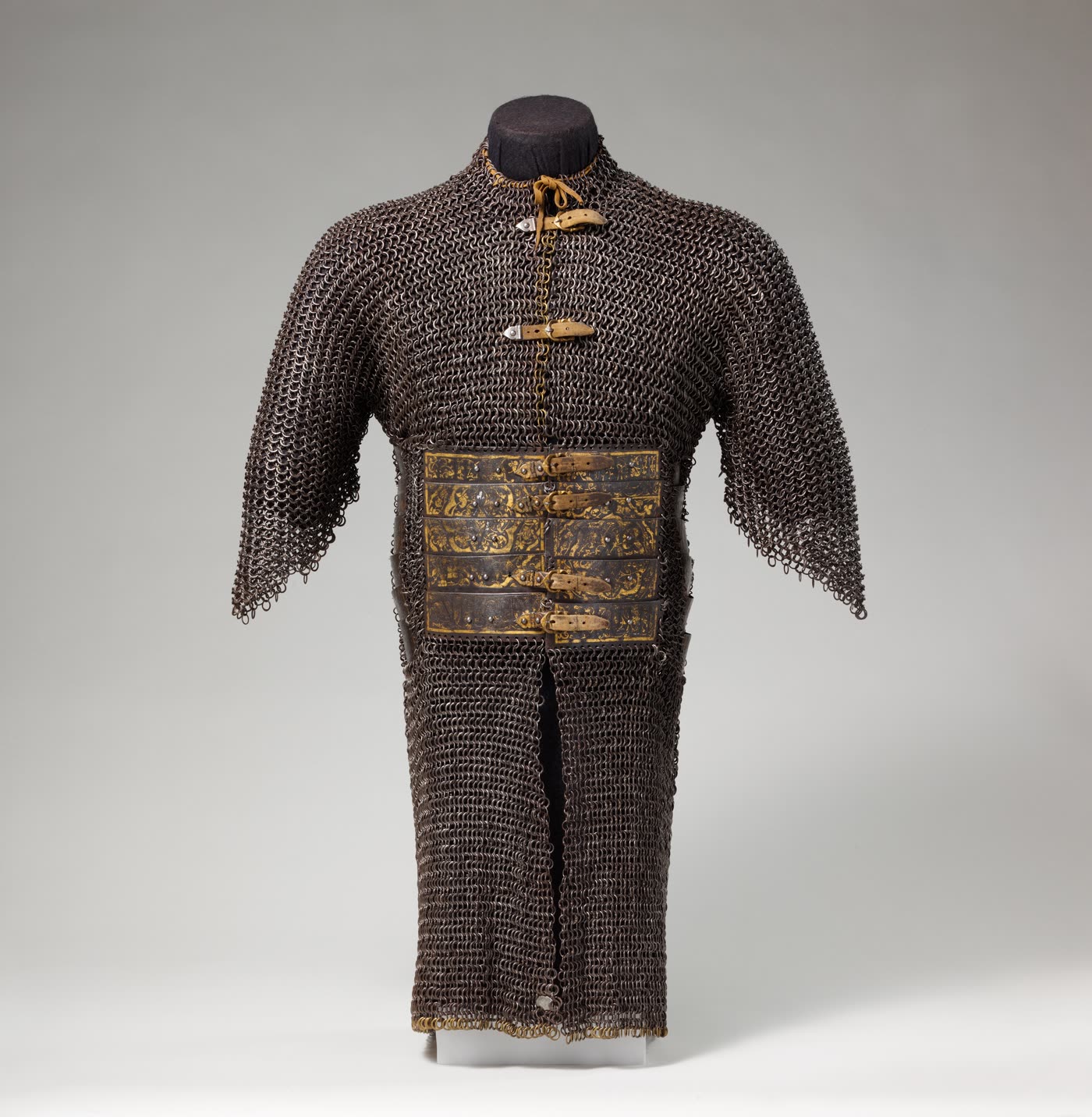
Wire gauge numbers run backwards, so a higher number is thinner wire, and there is more than one gauge system. Two matter for chainmail. SWG is the Standard Wire Gauge, a British system, and AWG is the American Wire Gauge. The same number does not give the same wire. Sixteen gauge is where the difference starts to hurt, because it is the size many weaves are built around.
The two systems side by side
| Gauge | SWG diameter | AWG diameter |
|---|---|---|
| 12 | 2.642 mm (0.104 in) | 2.053 mm (0.081 in) |
| 14 | 2.032 mm (0.080 in) | 1.628 mm (0.064 in) |
| 16 | 1.626 mm (0.064 in) | 1.291 mm (0.051 in) |
| 18 | 1.219 mm (0.048 in) | 1.024 mm (0.040 in) |
| 20 | 0.914 mm (0.036 in) | 0.812 mm (0.032 in) |
Sixteen SWG is 1.626 mm. Sixteen AWG is 1.291 mm, about 20 percent thinner. In fact 14 AWG (1.628 mm) is almost exactly 16 SWG. If a listing says 16 gauge and does not say which system, you can end up with rings that are a fifth thinner than the pattern you planned.
The American values above come from the standard copper wire tables published by NIST. SWG values are the long-standing British figures, and most chainmail ring sellers who use SWG say so.
What it does to the weave
Aspect ratio is inside diameter divided by wire diameter, so thinner wire raises it. Take a 1/4 inch (6.35 mm) inside diameter:
- 16 SWG gives 6.35 / 1.626, which is 3.9.
- 16 AWG gives 6.35 / 1.291, which is 4.9.
For European 4-in-1 both work. For Byzantine the first is comfortable and the second is loose. For a tight scale mail ring the first may be perfect and the second may let scales slip. See aspect ratio explained for the ranges.
Weight and strength change too. The cross-sectional area of the wire goes with the square of the diameter, so 16 SWG has about 1.6 times the metal of 16 AWG. A shirt made from it is noticeably heavier and the rings are harder to open.
How to tell which system a listing means
- Look for the letters SWG or AWG in the description. Honest sellers state it.
- Look for a millimetre or inch wire diameter. If it is 1.6 mm or 0.064 inch, it is 16 SWG.
- If neither appears, assume the worst and measure the rings when they arrive. A caliper settles it.
- Be wary of the phrase 16 gauge combined with a metric inside diameter, because mixed units often mean a manufacturer who has not thought about it.
Jump rings sold for jewellery often use AWG. Rings sold specifically for chainmail more often use SWG, particularly for steel and aluminum in the 14 to 18 range. Both are used, so check.
Choosing between them
Pick the system the project guide uses. If a tutorial says 16 SWG and 1/4 inch, buy exactly that. If you are designing your own, work from the aspect ratio you want and the weight you can tolerate, then choose a wire from either table. The wire gauge chart lists the common sizes with typical uses, and the calculator will convert gauge and inside diameter into AR.
Questions
Is 16 gauge the same as 1.6 mm?
Only 16 SWG, which is 1.626 mm. 16 AWG is 1.29 mm.
Which is better for a beginner?
Either works with the right inside diameter. Many beginner patterns use 16 SWG with 1/4 inch rings or 18 SWG with 3/16 inch rings because both give an aspect ratio near 3.9.
Can I mix SWG and AWG rings in one piece?
Avoid it. Even when the difference seems small, the rings behave differently and show up as uneven areas.