Butted, riveted and welded rings
How butted, riveted, welded and solid rings differ, what the closure does to strength and appearance, and which to choose for costume, decoration or serious reproduction armour.
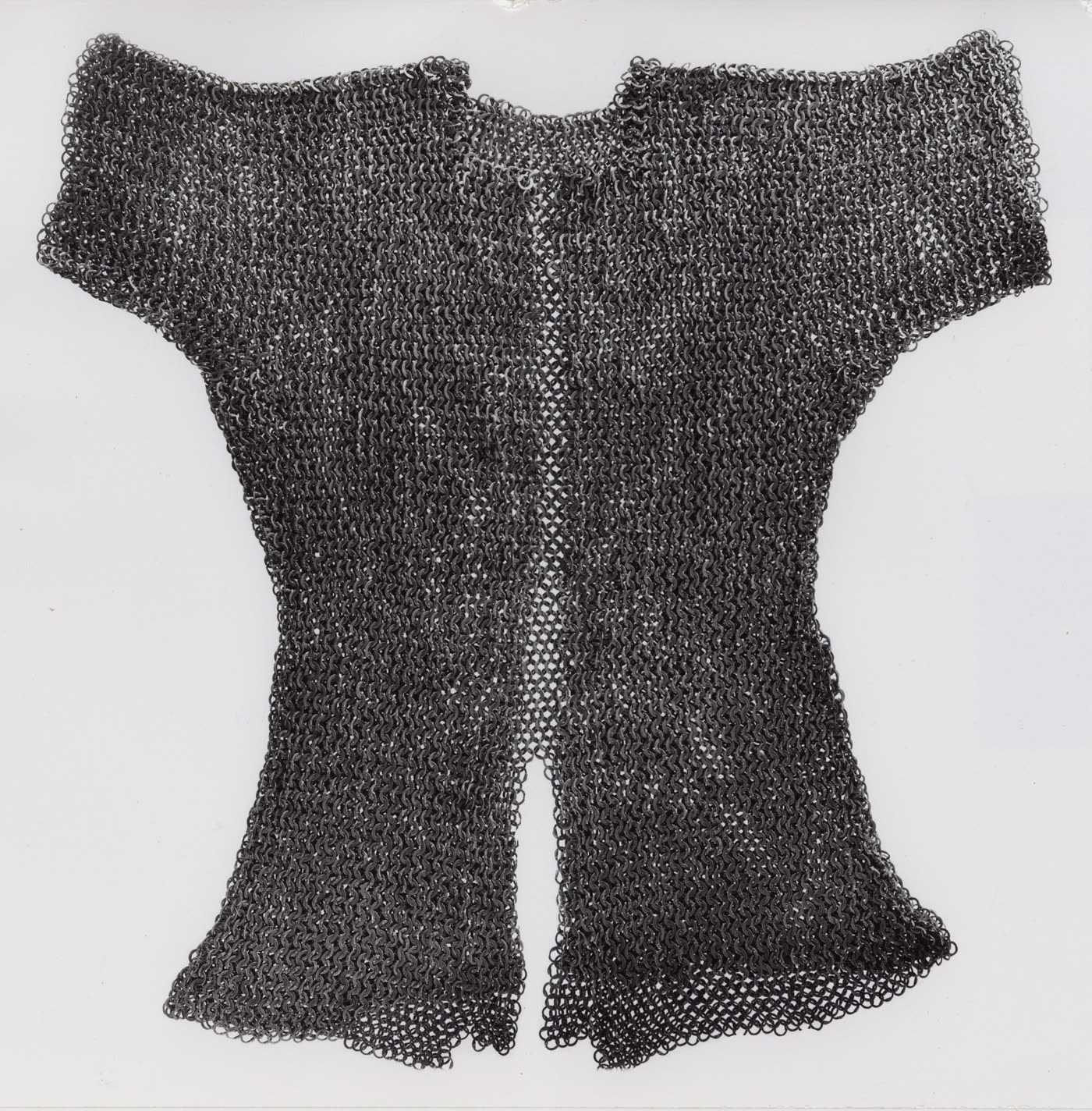
A mail ring has a seam where the wire ends meet. How that seam is closed decides how strong the ring is, how it looks, how long it lasts and how much it costs. Four closures cover almost everything you will meet.
Butted rings
A butted ring is cut from a coil and closed so the two ends touch. Nothing joins them. The ring holds because the wire is stiff and the neighbouring rings do not push the seam open. This is how nearly all hobby chainmail, jewellery and costume mail is made.
Good for: bracelets, necklaces, scale mail pouches, decorative panels, costume pieces and anything that will not take a hard hit.
Limit: a hard pull or a pointed impact can open the seam. A butted ring is only as strong as the force needed to spring the ends apart.
Riveted rings
A riveted ring has its ends flattened and a small hole punched through both. A tiny rivet goes through the hole and is flattened to hold the ends together. Historic European mail was made this way, often alternating rows of riveted rings with solid punched rings. Riveting is slow, specialised work.
Good for: reproduction armour, reenactment and display pieces where historical accuracy and real strength matter.
Limit: cost and time. A shirt can have tens of thousands of rings. Each rivet is a separate operation.
Welded rings
Rings are closed by welding or soldering the seam. This is stronger than butted and much faster than riveting, though the weld point is still the weak spot and the appearance is different from historical mail. Laser and spot welding are used on steel and stainless rings. For jewellery in precious metals, solder is common.
Solid rings
Solid rings are punched or cut from sheet with no seam at all. Alternating solid and riveted rows gave medieval mail extra strength because the solid rings cannot be opened. They are rarely seen outside reproduction work.
What changes in practice
| Closure | Strength at the seam | Cost | Typical use |
|---|---|---|---|
| Butted | Lowest | Lowest | Jewellery, costume, decoration |
| Welded | Moderate to high | Moderate | Stronger costume and light armour |
| Riveted | High | High | Reproduction and reenactment armour |
| Solid | Highest | Highest | Alternating rows in reproduction mail |
None of these is protective unless the wire, ring size and construction are right for the threat. Butted aluminum mail will not stop a blade. Do not rely on any hobby mail for protection.
How to choose
For something to wear, display or give as a gift, butted rings are the practical choice and what most guides here assume. If you are building armour for reenactment or LARP and want it to survive contact, riveted or welded steel is worth the extra cost and weight. If you are making food-contact items such as a scrubber, see the scrubber guide, where welded stainless is common.
Making butted rings hold
- Close each ring until the ends meet flat with no gap.
- Use wire that is hard enough to hold its shape. Very soft wire opens under load.
- Avoid very high aspect ratios. A big, thin ring opens more easily than a small, thick one. Check the number with the calculator.
- Choose the right wire. Wire gauge matters: thicker wire resists opening much more.
Questions
Can I rivet rings at home?
Yes, with a punch, a rivet supply and a small anvil, but it takes many hours for even a small piece. Most hobbyists try it once on a coif or sleeve cuff.
Is welded mail the same as riveted?
No. Welded rings are closed by heat. Riveted rings are closed mechanically. Both are stronger than butted rings.
How can I tell what closure a piece has?
Look at the seam under magnification. A butted ring has a visible slit. A riveted ring has a small round dot. A welded ring has a lump or a nearly invisible join.