Aspect ratio
What aspect ratio means in chainmail, how to calculate it from wire gauge and inside diameter, typical ranges for common weaves, and how to fix a weave that jams or gapes.
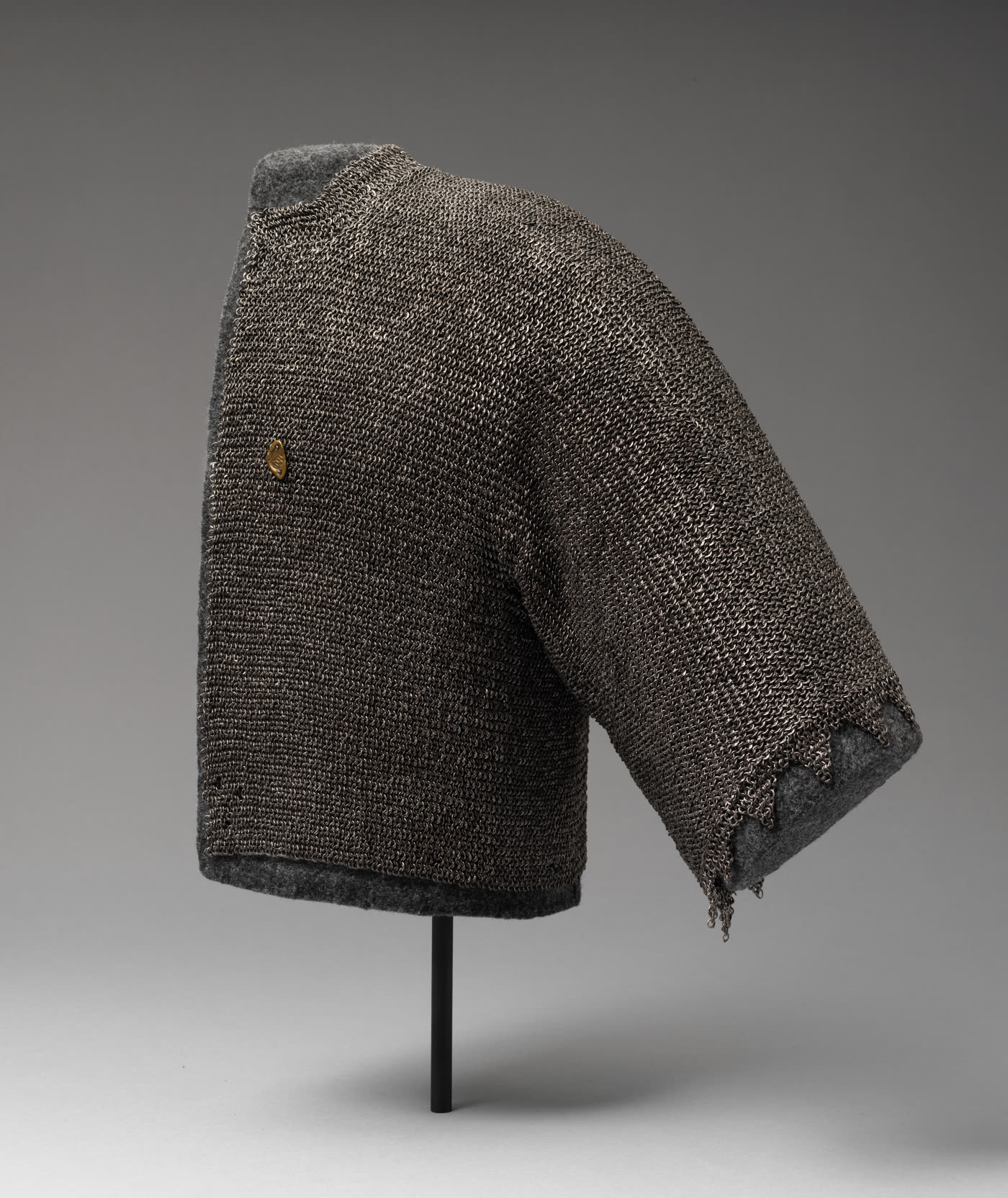
Aspect ratio, usually written AR, is the inside diameter of a ring divided by the diameter of the wire it is made from. It is a plain number with no unit, and it tells you more about how a ring will behave in a weave than either measurement alone. A 1/4 inch ring made from thick wire is a tight ring. The same inside diameter in thin wire is a loose one. AR captures that.
The formula
AR = ID / WD, where both are in the same unit.
Take 16 SWG wire, which is 1.626 mm thick, coiled to a 1/4 inch (6.35 mm) inside diameter. 6.35 divided by 1.626 is 3.9. Now take 18 SWG wire, 1.219 mm, at the same 1/4 inch. That is 5.2. Same inside diameter, but the second ring has far more room inside it.
You can also work backwards. If a weave needs an AR of about 3.5 and you have 16 SWG wire, the inside diameter should be 3.5 times 1.626, which is 5.7 mm, close to 7/32 inch.
The aspect ratio calculator does this for any gauge and any inside diameter, and tells you which weaves the result suits. If you are unsure which gauge system you have, read SWG versus AWG first, because the same gauge number means different wire in each system.
Why it matters
Every weave has to pass a certain number of rings through the inside of each ring. The inside is a fixed hole. The wire takes up space in that hole as it passes through. If the hole is too small for the wire that has to go through it, the rings jam. If the hole is much larger than needed, the weave is loose and gappy.
Think of AR as the ratio of hole to wire. Low AR means a small hole around thick wire: dense, heavy, stiff, and sometimes impossible. High AR means a big hole around thin wire: light, open and floppy.
Typical working ranges
These are approximate ranges as builders commonly report them. They shift with wire hardness and how well you close the rings.
| Weave | Common AR range | Notes |
|---|---|---|
| European 4-in-1 | 3.0 to 4.5 | Forgiving. About 3.5 to 4 is easy to assemble. |
| Byzantine | 3.2 to 4.0 | Needs room for pairs to pass. Below 3.2 gets difficult. |
| Japanese 6-in-1 | 4.0 and up | Six links per ring ask for more space. |
| Scale mail rings | 3.5 to 5.0 | Rings carry scales, so they are often a little loose. |
Fixing a weave that does not behave
The rings will not go through each other. AR is too low. Use larger inside diameter rings, or thinner wire.
The weave is floppy and shows gaps. AR is too high. Use a smaller inside diameter, or thicker wire.
It works with soft wire but not stiff. Springback is the cause. Stiff wire opens slightly after you close it and leaves a tiny gap and a larger effective ring. Close rings a little past the point where they meet.
Different batches behave differently. Ring suppliers measure inside diameter to a tolerance. A tenth of a millimetre matters at small sizes. Compare a ring from each batch against a drill bit or a caliper.
Measuring the numbers
A digital caliper reads both measurements to a hundredth of a millimetre and costs little. Measure the wire diameter, not the ring thickness at the cut, and measure the inside diameter across the widest closed ring. Ten rings averaged is better than one.
If you make your own rings, the inside diameter is set by the mandrel you coil on, plus a little springback. See how to make chainmail rings.
Questions
Is higher AR better?
No. It means a looser ring. Choose the AR the weave needs, not the largest one.
Does AR change if the rings are oval after closing?
Slightly. Ring that has been squeezed oval has a smaller inside dimension in one direction, so a ring that was fine can jam. Round them before assembling.
Can I use millimetres for both numbers?
Yes. Any unit works as long as both numbers use the same one.