How to make your own chainmail rings
A practical method for making chainmail rings from wire, covering mandrel choice, coiling, cutting, springback and how to check that your rings match.
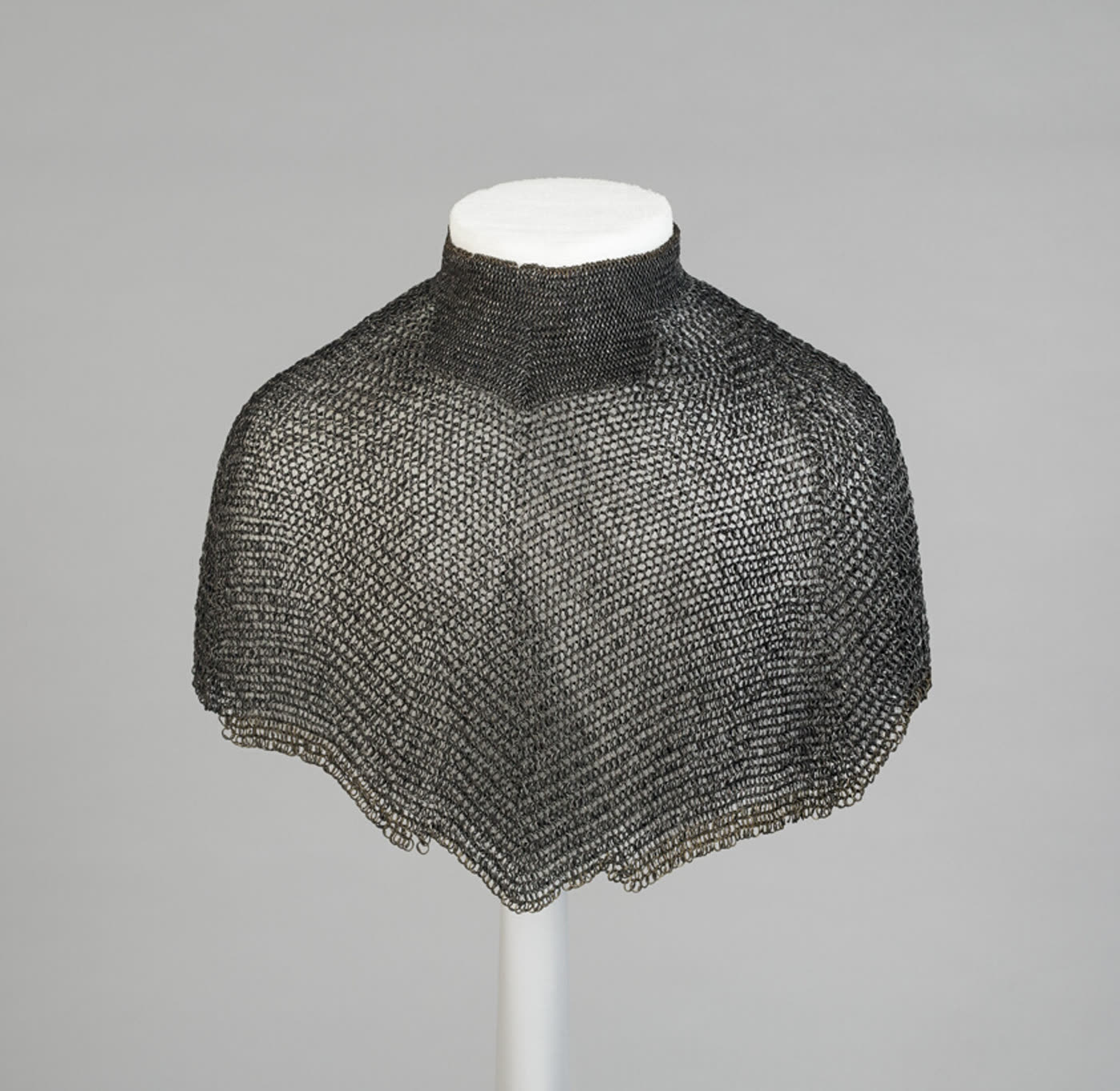
Buying ready-cut rings is easier, but making your own gives you any size, any metal and a lower cost per ring once you are producing in volume. The process is simple: wrap wire tightly around a round rod, slide the coil off, and cut it into rings. The skill is in getting rings that are all the same size.
What you need
- Wire in the gauge and metal you want. Soft temper is easiest to coil.
- A mandrel, a round steel rod whose diameter sets the inside diameter. Drill bits, nails and knitting needles all work. Measure them rather than trusting the label.
- A way to turn the mandrel. A hand drill or a crank helps with anything beyond a few dozen rings.
- Flush cutters or a jeweller's saw to cut the coil.
- A caliper to check results.
The tools guide covers the rest of the kit.
Choosing the mandrel
Start from the aspect ratio your weave needs and the wire you have. Multiply wire diameter by the AR to get the target inside diameter. For 16 SWG (1.626 mm) at an AR of 3.9 that is about 6.35 mm, so you want a 1/4 inch mandrel.
Now allow for springback. When you release a coil it opens a little, so the rings end up larger than the mandrel. How much depends on the metal and the wire's hardness. Soft aluminum opens little. Stainless and spring steel open noticeably. A common approach is to coil a test length on a few mandrel sizes, cut a ring from each, and measure. Pick the mandrel whose rings land on your target. Write the answer down, because it is the same every time for that wire and that mandrel.
Coiling
- Anchor the end of the wire. Pass it through a hole in the mandrel or clamp it against a handle.
- Turn the mandrel while keeping the wire under steady tension, laying each turn tight against the last. Gaps between turns produce rings with uneven cut edges.
- Keep the wire perpendicular to the mandrel. If it climbs sideways the coil goes oval.
- Stop when the coil is about as long as you want, or when you can no longer keep it tidy. Short coils are easier to cut accurately.
Wear gloves for steel wire. Cut-resistant gloves are better again. A coil of stiff wire can lash if it slips.
Cutting
Slide the coil off the mandrel. Cut along one side with flush cutters. Each cut leaves one flat face and one pointed face on the wire. Cut the coil with the flat side of the cutter always toward the same side, so every ring has one flat end and one pointed end. Then you can close rings so the flat ends meet and the seam is tight.
A saw gives cleaner cuts on both ends. It is slower but is the right choice for rings you plan to solder or rivet.
Checking your rings
Measure the inside diameter of ten rings and the wire diameter. Work out AR with the formula in aspect ratio explained. Sort out rings that are visibly oval or have a gap larger than a wire width. Keep each batch separate and label it with gauge, metal and inside diameter.
Closing and finishing
Rings cut from a coil have an open seam. For most hobby work you close the rings with pliers as you weave. For riveted or welded work you close, flatten and rivet them first.
Aluminum rings can be anodised. Steel can be oiled or blackened. Stainless needs nothing. Mild steel rusts unless you coat it.
When it is not worth it
Making rings by hand is satisfying but slow. A pound of 16 SWG aluminum wire is about 80 metres (260 feet) of wire, which is several thousand rings at 1/4 inch, so the cutting alone takes hours. If your goal is a finished piece and not the process, buying cut rings saves hours.
Questions
What is springback?
The slight opening of a coil of wire after you release it. The coil ends up wider than the mandrel, so rings come out larger than the rod you used.
Can I cut rings with a normal wire cutter?
Flush cutters are better because they leave a flat face. A normal side cutter leaves a point on both faces, which is harder to close tidily.
How many rings does one turn of the coil make?
Each full turn of the coil makes one ring.