Choosing a metal
A comparison of the metals used for chainmail rings, covering weight, strength, finish, corrosion and cost, with advice on which suits jewellery, costume, armour and kitchen use.
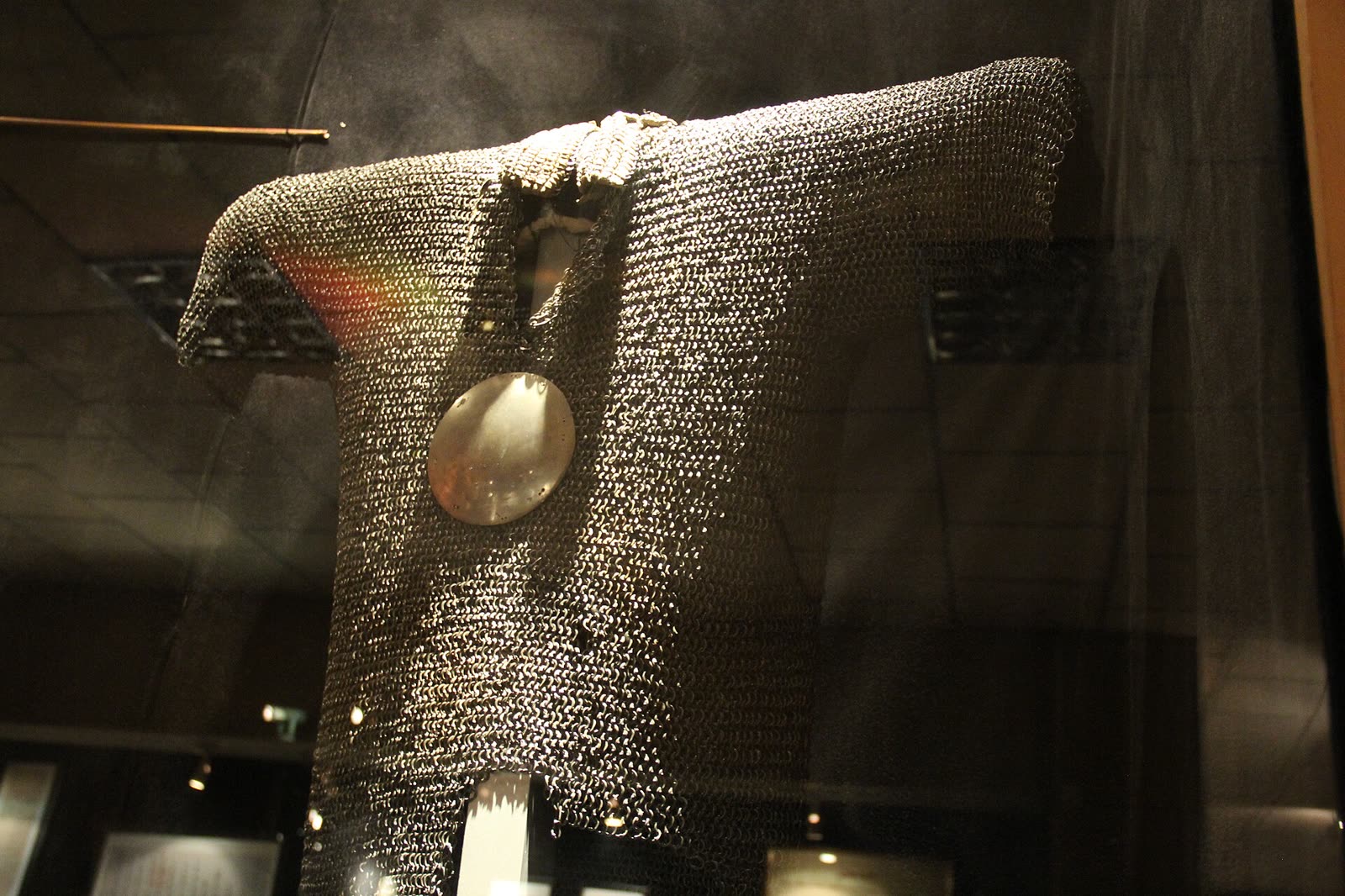
The metal you pick changes weight, feel, price and how long the piece lasts. Gauge and ring size matter, but metal can matter more. Here are the metals you will meet, with their real differences.
Weight
Density sets how heavy a piece will be for the same ring count.
| Metal | Density (g/cm³) | Compared with aluminum |
|---|---|---|
| Aluminum | 2.7 | 1x |
| Titanium | 4.5 | 1.7x |
| Steel | 7.85 | 2.9x |
| Stainless steel (304) | about 8.0 | 3.0x |
| Brass | about 8.5 | 3.1x |
| Bronze | about 8.8 | 3.3x |
| Copper | 8.96 | 3.3x |
A shirt in steel weighs roughly three times what the same shirt weighs in aluminum. That gap is why costume makers almost always choose aluminum and reenactors choose steel.
Aluminum
Light, soft and cheap, and the standard for beginners and costume work. It takes anodising well, so you can get bright colours that do not rub off. The downsides are softness and low strength. Aluminum rings dent, scratch, and open under strain. It is not protective. Anodised colours can fade or scratch through to bare metal with heavy wear.
Best for: learning, bracelets, scale mail pouches, costume pieces, anything where weight matters.
Mild steel
Strong, inexpensive and heavy. It rusts unless it is galvanised, oiled or blackened. Bright steel rings need to be oiled and stored dry. Rust is the main complaint, and it stains skin and fabric.
Best for: reenactment and LARP armour you will maintain. Not for jewellery.
Galvanised steel
Steel coated in zinc, which resists rust. It is common and cheap and looks like dull silver. The coating is a concern for items that touch food or skin for long periods, and zinc fumes are hazardous if you weld or heat it. Use it for decorative and costume work, not kitchenware.
Stainless steel
Corrosion resistant, strong and food safe in the right grade. Grades 304 and 316L are the usual choices. It is hard on hands and tools, and springy, so rings need to be closed past the point where they meet. It is the right choice for gloves and scrubbers and for jewellery that must not tarnish. 316L is the grade commonly specified for kitchen scrubbers.
Best for: scrubbers, gloves, long-lasting jewellery, armour that must not rust.
Copper, brass and bronze
Soft and beautiful, with warm colours that darken to a patina. Copper is very soft, so rings open easily. Brass and bronze are harder. All three are heavy, and they tarnish unless lacquered. Copper and brass can turn skin green in contact with sweat.
Best for: decorative jewellery, patina effects and accent rings in a mixed piece.
Titanium and niobium
Light, strong and available in colours produced by anodising. Rare in chainmail because of cost and difficulty working them. Titanium is stiff and springy. Niobium is softer, hypoallergenic and takes bright colours.
Best for: sensitive skin and high-end jewellery.
Choosing by use
| Use | Suggested metal |
|---|---|
| First project, practice | Aluminum |
| Bracelet or necklace | Aluminum, stainless, or bronze |
| Scale mail pouch or costume | Anodised aluminum |
| Reenactment or LARP armour | Steel or stainless |
| Kitchen scrubber | 316L stainless |
| Cut-resistant glove | Stainless mesh |
For ring sizes by metal, remember that stiffer metals open more after coiling, which affects the mandrel you need. Making your own rings covers springback. Wire gauge tells you what size to buy.
Skin reactions
Nickel is the common culprit. Many stainless steels contain nickel, though it is locked into the alloy. If you have a nickel allergy, look for titanium, niobium or sterling silver for jewellery, and check with a doctor if in doubt.
Questions
What is the best metal for a first project?
Aluminum. It is soft, light and inexpensive, so mistakes cost little.
Will aluminum chainmail turn my skin black?
Bare aluminum can leave a grey mark on skin. Anodised aluminum is sealed and much less likely to.
Is stainless steel chainmail dishwasher safe?
Stainless scrubbers generally are. Check the maker's instructions.