Byzantine
How the Byzantine weave is built from rings and pairs, what aspect ratio it needs, why it makes such good bracelets and necklaces, and where beginners go wrong.
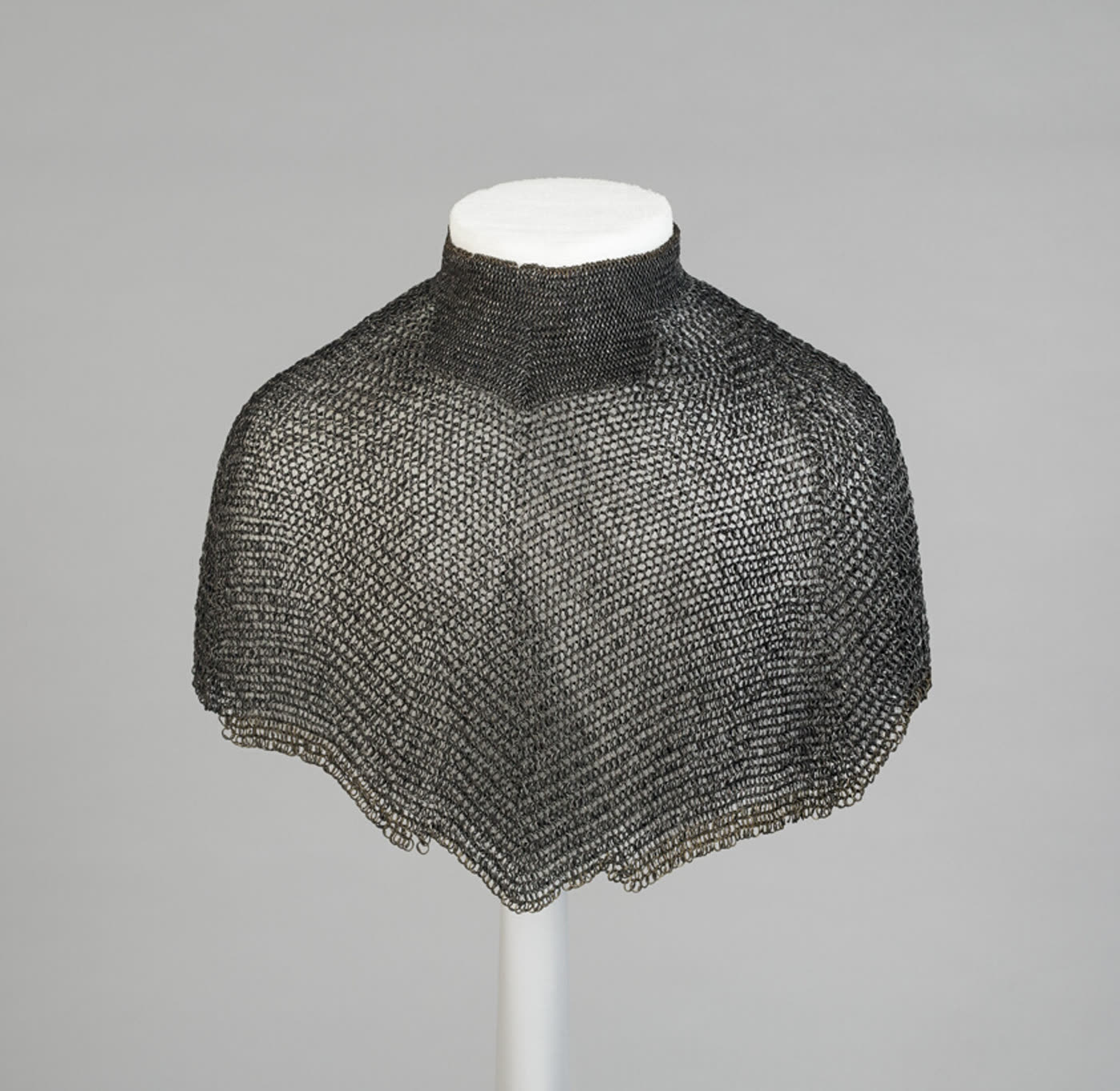
Byzantine is a chain, not a sheet. It makes a round, rope-like strand that is dense, flexible, and looks far more complicated than it is. It is the weave most jewellery makers learn right after European 4-in-1, and it is the one most people mean when they say they want a chainmail bracelet that looks like a chain.
How the pattern is built
The unit is a pair of rings that sit side by side and act as one fat ring. You start with two such units linked, each passing through the other. Then you add a ring to the end, weaving it through both rings of the last pair, and every addition is the same move repeated.
The structure tends to twist into a square-section chain. Done tightly, the result is a rope with four sides that moves like a snake. It is thicker than it looks because each unit contains several overlapping rings in cross section.
Ring sizes and aspect ratio
Byzantine is less forgiving than European 4-in-1. If the rings are too small, you cannot pass the second ring through the first pair. If they are too large, the chain loses its shape and flops. Builders commonly work in the 3.2 to 4.0 aspect ratio range, with about 3.5 as a safe starting target.
Some numbers to start from, all using the formula in aspect ratio explained:
| Wire | Inside diameter | Aspect ratio |
|---|---|---|
| 18 SWG (1.22 mm) | 3/16 in (4.76 mm) | 3.9 |
| 18 SWG (1.22 mm) | 5/32 in (3.97 mm) | 3.3 |
| 16 SWG (1.63 mm) | 1/4 in (6.35 mm) | 3.9 |
| 16 SWG (1.63 mm) | 7/32 in (5.56 mm) | 3.4 |
| 20 SWG (0.91 mm) | 1/8 in (3.18 mm) | 3.5 |
A bracelet at 16 SWG and 1/4 inch is thick and substantial. Go down to 20 SWG and you get a fine chain suitable for a necklace, but the rings are small and slow to handle. Soft aluminum eases the pass-through problem because you can squeeze rings slightly before closing.
Steps in plain terms
- Close a supply of rings and open an equal supply. Keep them in separate dishes so you never mix them up.
- Make two starter units: open a ring, add two closed rings, and close it. Repeat, so you have two units of three rings.
- Link the units so each passes through the other's centre.
- For each new unit, take an open ring, thread it through the last two rings of the chain, then through one more closed ring, and close it. Add a second ring beside it to form the pair.
- Keep every addition on the same side. Mixing sides is how a Byzantine goes wrong.
Video tutorials help here because the hand movement is hard to describe in words. Watch one, then try with a size you can see easily: 16 SWG at 1/4 inch in a bright finish makes the motion clear.
Mistakes
Twist drift. The chain slowly spirals. A little is normal. A lot means rings are being passed from alternating sides.
Too tight. Rings that barely fit make the chain stiff and wear the wire at the contact points. Move to a slightly larger inside diameter.
Clasp mismatch. Use a clasp whose loop is no thicker than your ring wire, or it will lever the end ring open.
If you want something wider, European 4-in-1 makes flat sheets and straps. See the weave comparison for the full picture.
Questions
Is Byzantine harder than European 4-in-1?
Slightly. The steps are repetitive but you must track which rings go through which pair. Expect to take apart the first few inches once.
What clasp should I use?
A lobster or toggle clasp whose loop wire is no thicker than your ring wire. Attach it to the end rings.
Does Byzantine work in aluminum?
Yes. Aluminum is soft and light, so a long Byzantine necklace stays comfortable. It scratches more easily than steel.